








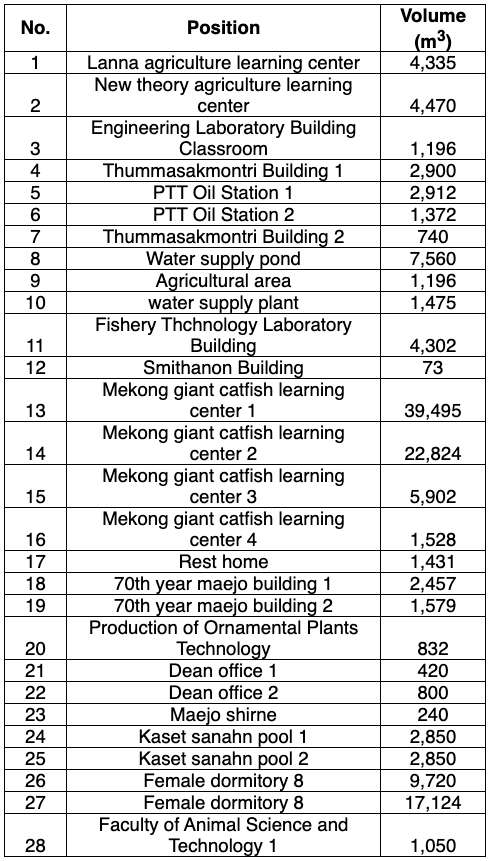
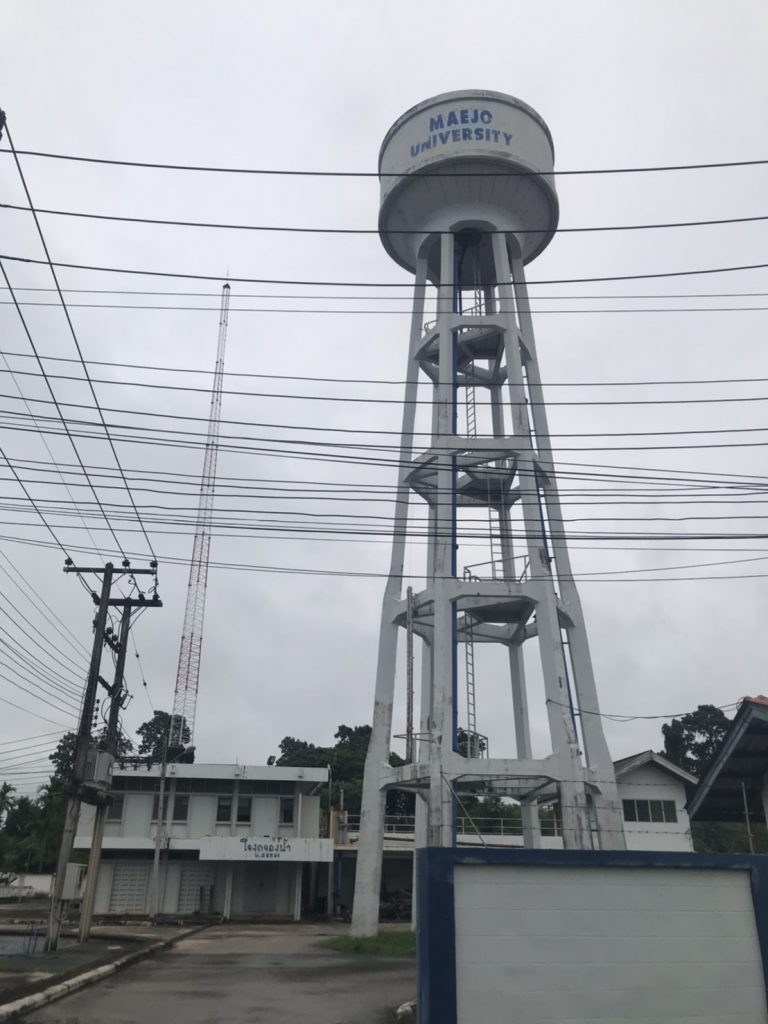
Maejo University has a 75,000-cubic meter raw water pond that supplies water for water supply Plant 1; a 20,000-cubic meter pond that provides water for water supply 2; a 32,200-cubic meter pond that supplies water for water supply Plant3; a 60,000-cubic meter pond that is used for agricultural purposes; as well as the Mae Faek-Mae Ngat Somboonshon Operation and Maintenance Project and natural canals running through the university. Currently, there are sufficient surface water sources for both the water supply system and agriculture.
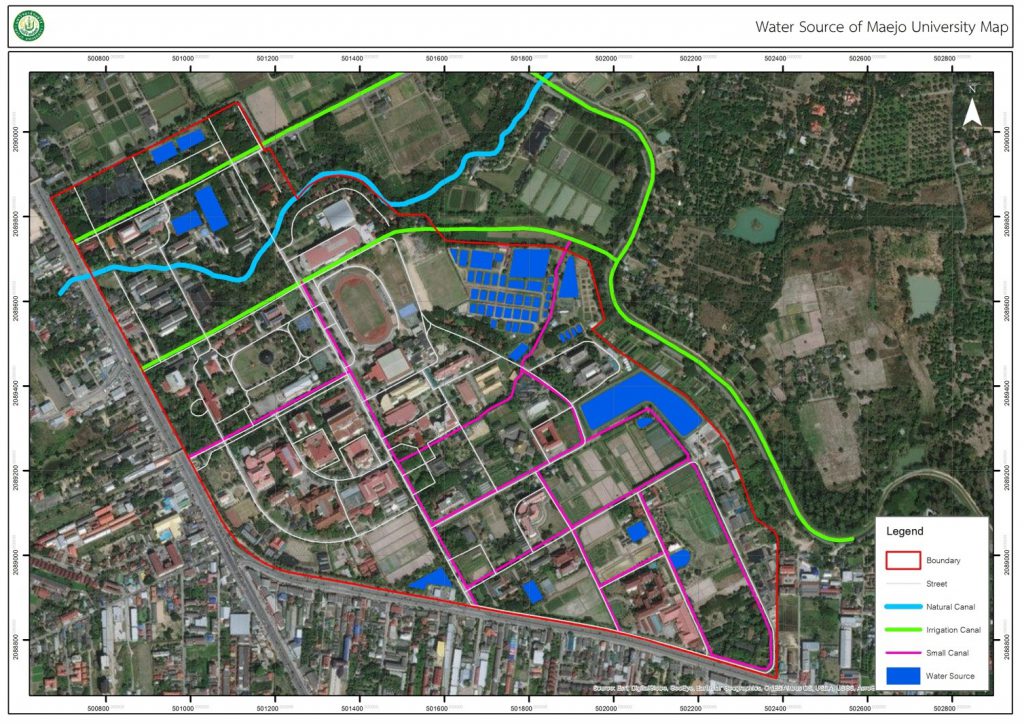
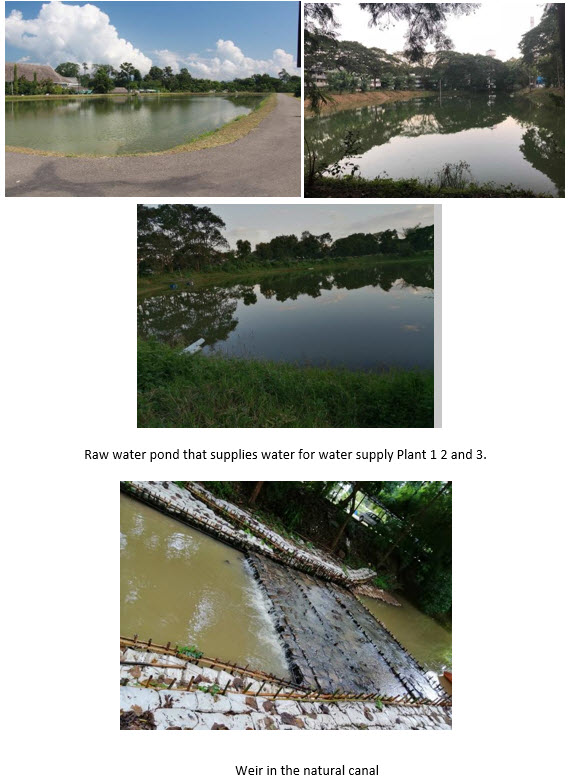
Water source of Maejo university
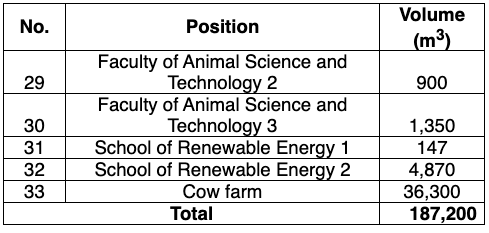
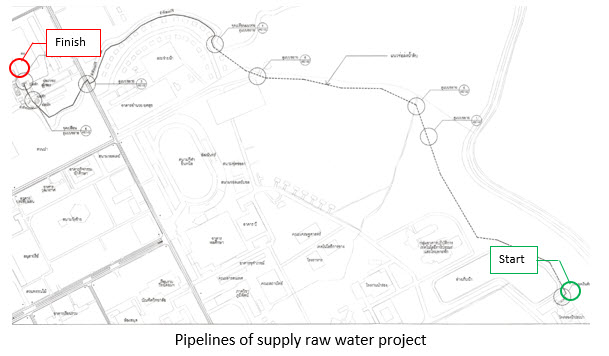
At present, Maejo University has a problem diverting water from the irrigation canal into the raw water storage pond of the second water supply plant, which has a relatively small storage capacity and insufficient to produce tap water to supply to water users for consumption. Therefore, there is a project to lay a pipeline to supply water from the raw water storage pond of first tap water plant, which has a larger capacity and storage volume, to the raw water pond of the second water plant. The budget of this project was $260,000. This project can support the water supply system of the second water supply plant to be sufficient for utility and agriculture by two water pumps, that have capacity 16.41 HP and flow rate was 6,667 LPM. Currently, the project is in progress.
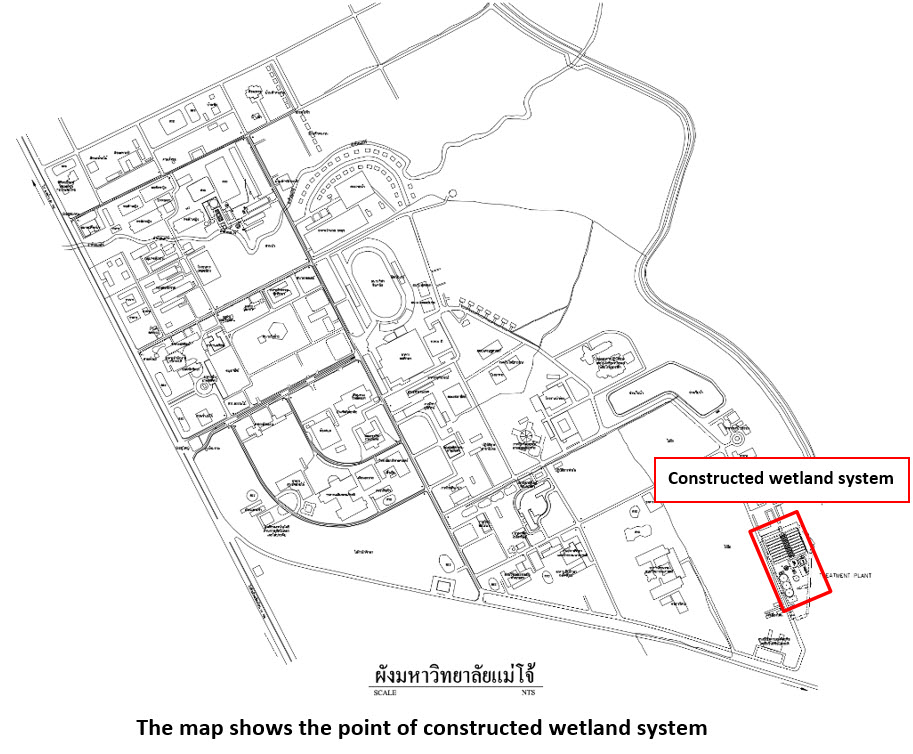
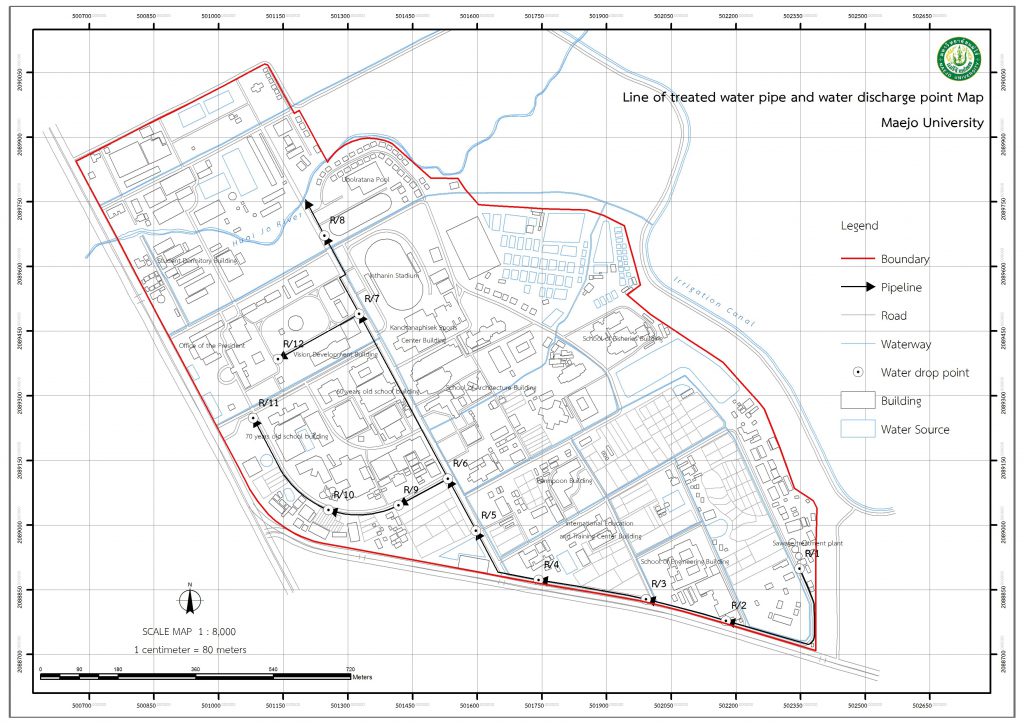
Maejo University has a pipe system that sends wastewater from all buildings to treatment plants and subsequently sends the treated water 12 distribution points as the illustrated by the R1-R12 dots on the map. Three of the distribution points further move the water to ponds for agricultural reserve, seven points of supply water for usage in glass field agriculture, the university forest garden and one additional point flows to the natural canal.
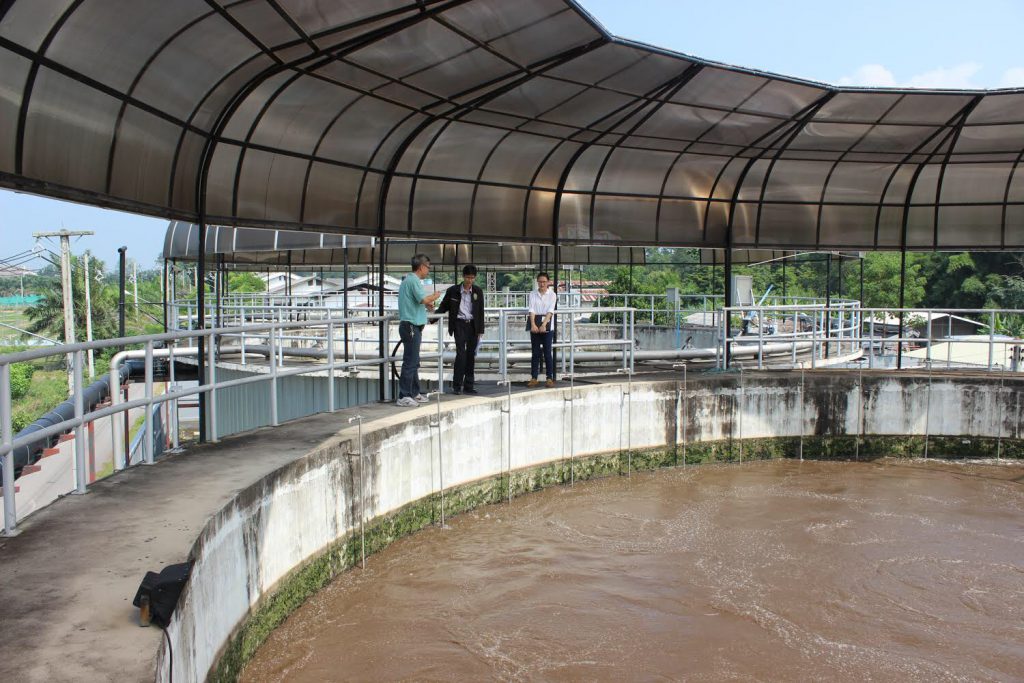
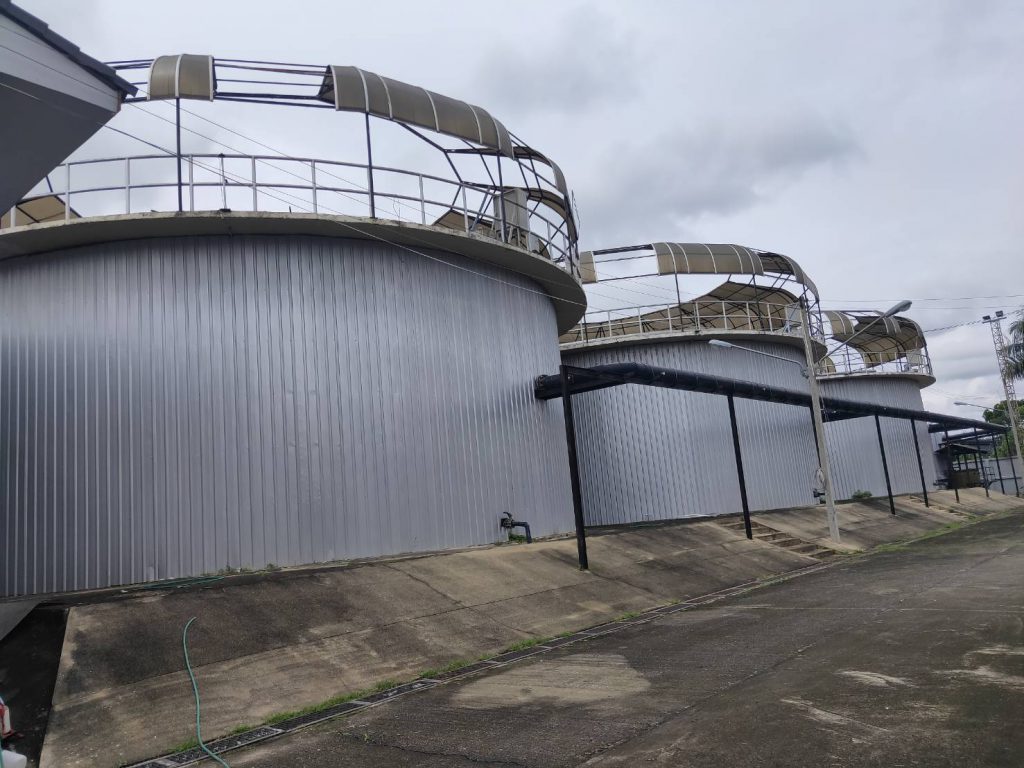
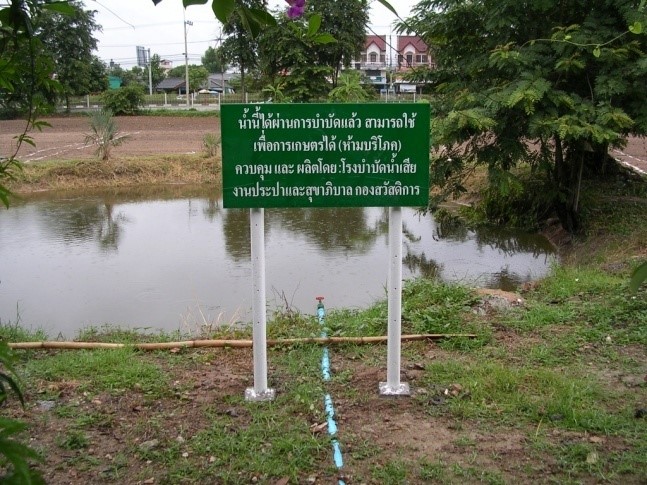
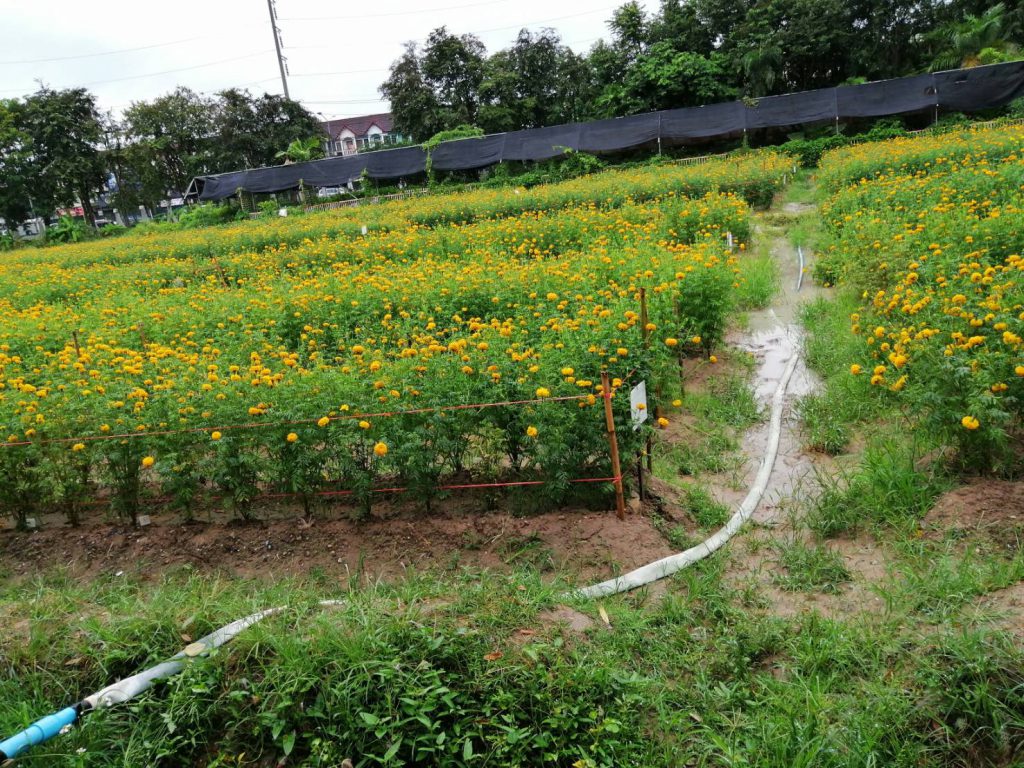
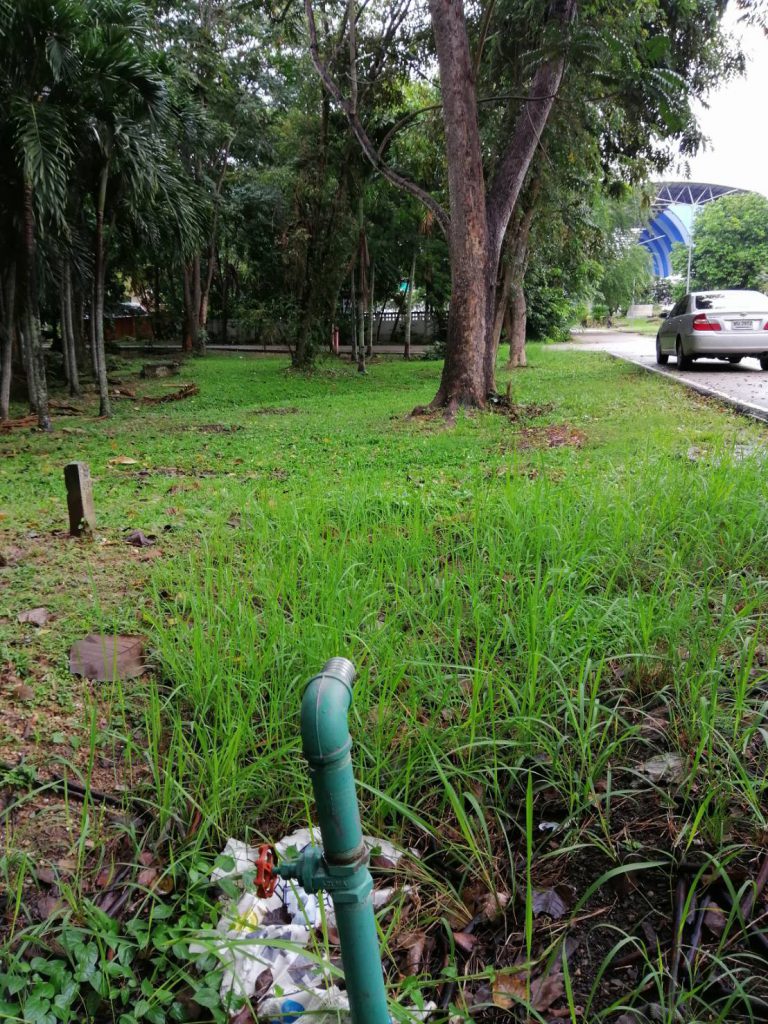
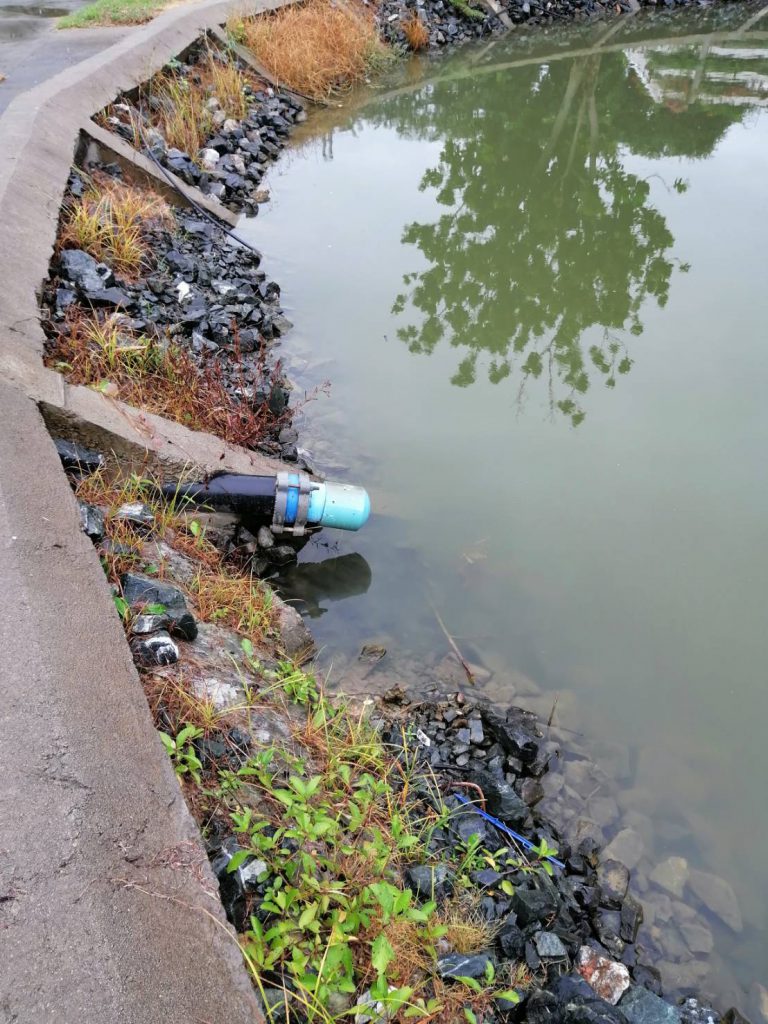
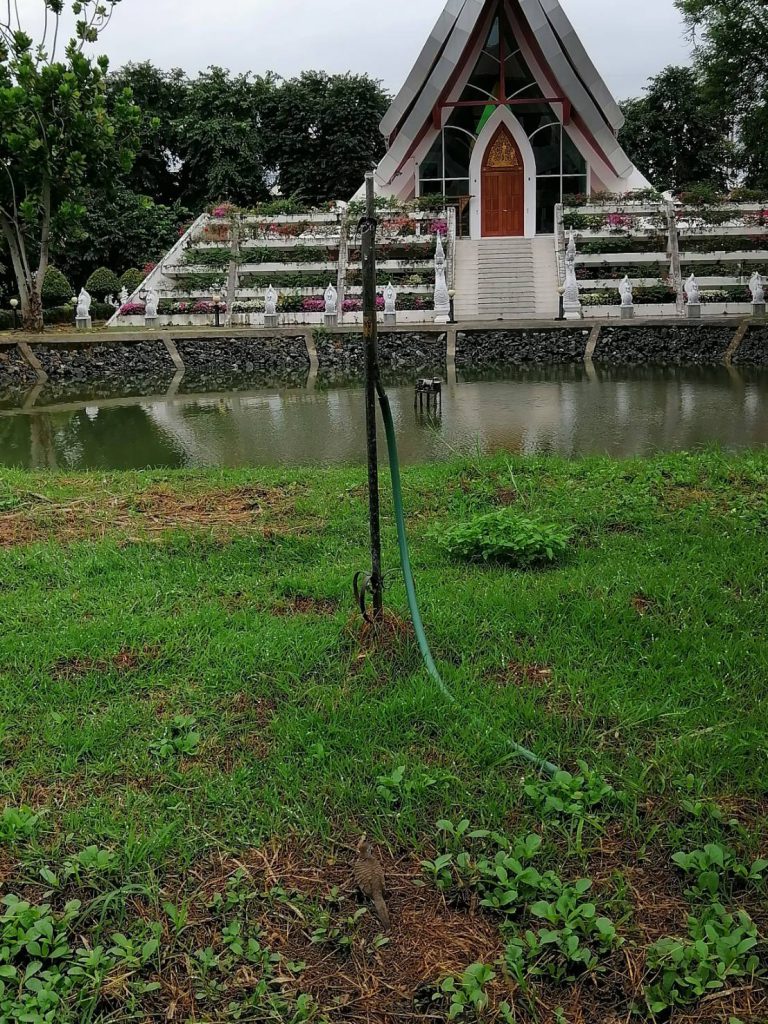
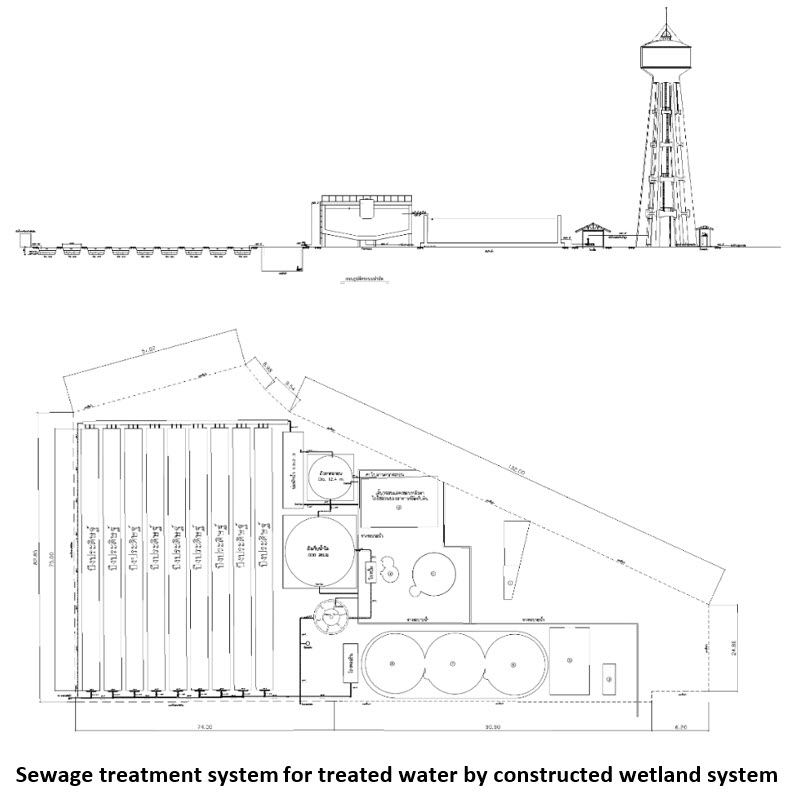
At present, Maejo University is in the process of constructing a sewage treatment system for treated water by constructed wetland system. The budget of this project was $486,300. The system can treat water 1,800 m3/day. After that, the treated water will be used throughout the university.